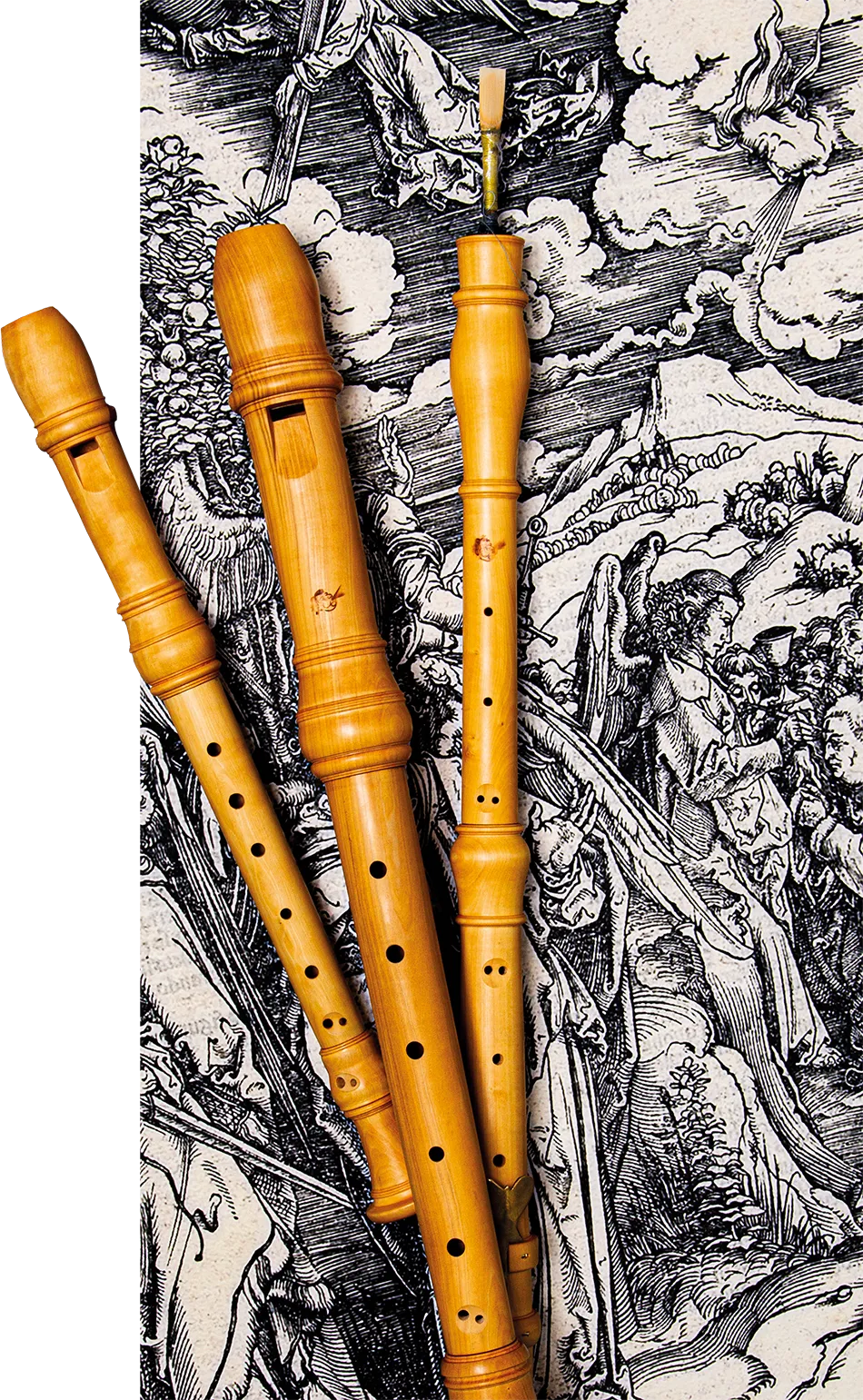
Recorders
soprano and altoBaroque oboes
made by Christoph Brandner
Why make wind instruments by copying old ones?
It was in the late 1950s and the early 1960s that the idea emerged of performing Baroque music as the contemporaries of the 17th and 18th centuries had heard it. At first it was above all musicians such as Nikolaus Harnoncourt and Gustav Leonhardt who put that idea into practice.
Craftsmen were therefore needed who could reproduce instruments of that period — instruments which, in the case of wind instruments and unlike stringed instruments, had long fallen out of use and survived at best in museums or in private collections, when they had not simply disappeared.
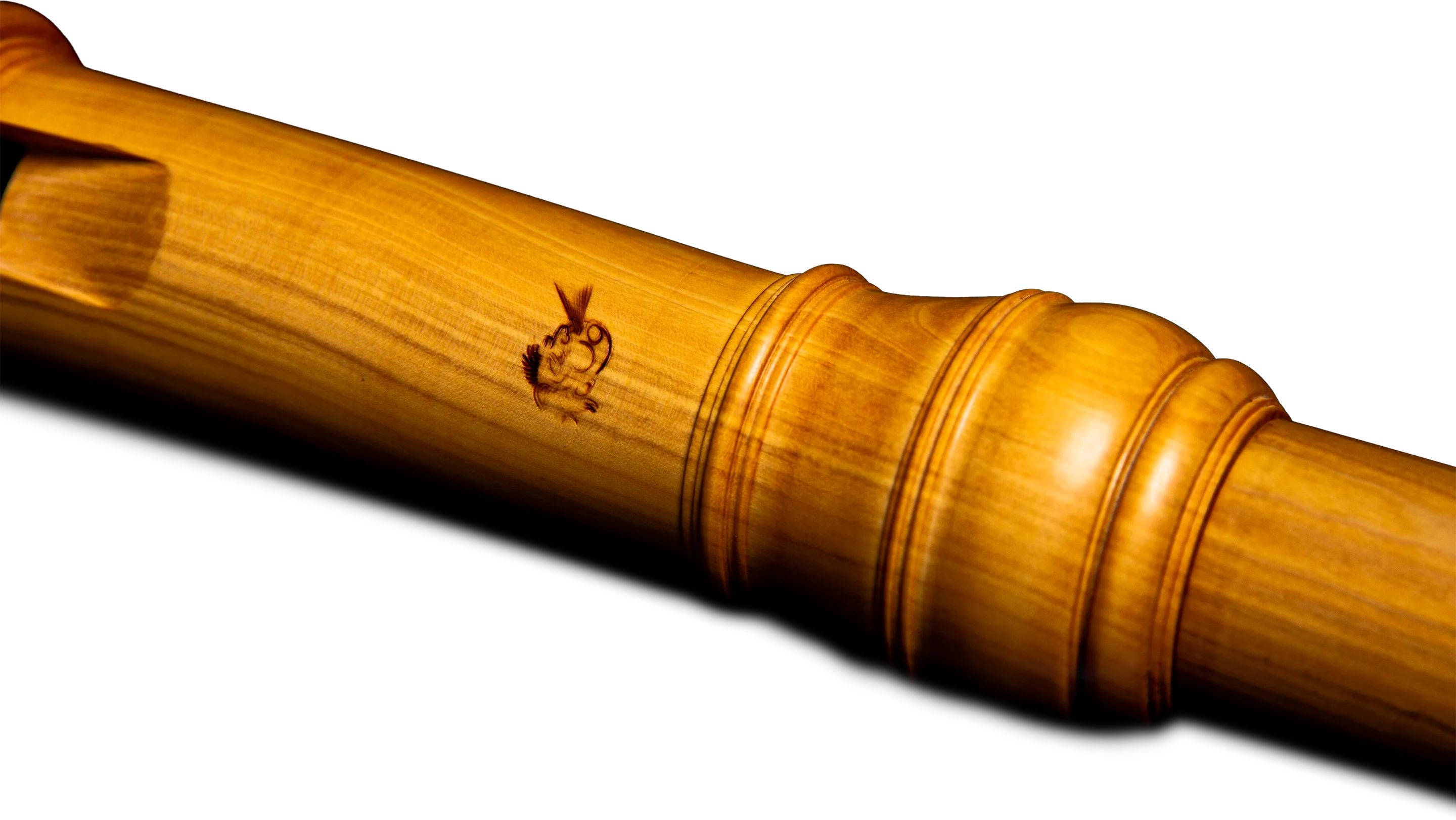
It also meant picturing the production methods of the time by studying every detail of the instruments still available. It was in fact a period in which semi-industrial processes were appearing. Waterpower was being harnessed to drive lathes. And oboes and flutes, or bassoons, bear witness to these developments in their elaborate turning work.
But countless other details testify to the inventiveness, the subtlety, the perseverance and the powers of observation of these craftsmen as they worked to improve the sound of instruments of such great refinement.